The 2026 midterm elections are over, but what do the results mean for AI spending, oil prices, taxes, and interest rates? Mitch Schlesinger, Evermay Wealth's Chief Investment Strategist, explores what matters most for investors in our latest Markets with Mitch.
How markets reacted
Wall Street has historically favored political gridlock, because it limits major policy
changes and gives markets more predictability. Gridlock also raises the risk of budget battles, government shutdowns, and continued volatility, and Washington is unlikely to stay calm for long.
What history shows after midterms
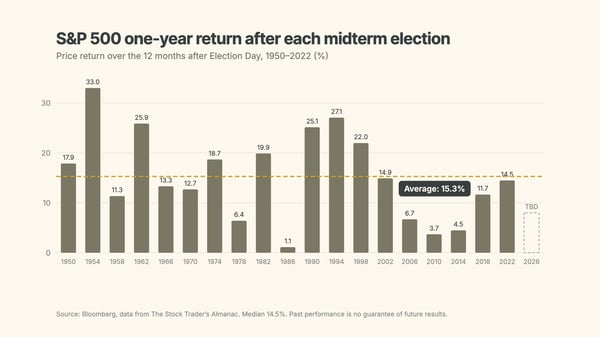
After each of the 19 midterm elections since 1950, the S&P 500 posted a positive return over the following 12 months. The average gain was about 15%, compared with roughly 9% in a typical 12-month period. That's a strong historical pattern, but it doesn't guarantee future returns.
What divided government means
Democrats now control Congress and Republicans hold the White House. Major policy changes aren't likely, since President Trump keeps his veto power. High-profile proposals from either party will probably be more about positioning ahead of 2028 than legislation anyone expects to pass in the next year or two. That leaves room for continued fiscal uncertainty, especially around federal budgets and government funding.
AI investment and the technology sector
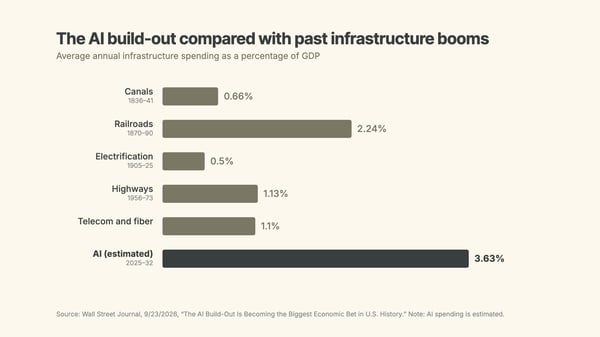
AI infrastructure spending, particularly among the hyperscalers, has become a major contributor to U.S. economic growth. Its scale draws comparisons with earlier build-outs such as the railroads and the interstate highways. Electricity demand, water consumption, and local opposition could lead to tighter state-level rules and slower data center construction, and Congress could pursue more oversight of AI developers.
Our outlook is that some projects may slow, but we expect AI investment to remain a key driver of economic and corporate earnings growth for several years.
Tax policy
We think major federal tax changes are unlikely before the 2028 presidential election. Several provisions of the 2025 tax law are already scheduled to expire. The deductions for qualified tips and overtime expire after 2028, and the enhanced state and local tax deduction limits expire after 2029. These provisions could become bargaining chips in future tax negotiations.
Depending on who controls Washington after 2028, proposals could include higher corporate income tax rates, with implications for earnings and valuations.
Iran, energy prices and interest rates
Oil prices and defense stocks declined after the election, possibly reflecting hopes for renewed diplomatic negotiations. Tensions around the Strait of Hormuz and disruptions to oil supplies remain in place, though. Without meaningful progress toward resolving the conflict, we don't expect big near-term changes in energy prices, inflation, or interest rates. Geopolitical developments and economic fundamentals matter much more to the interest rate outlook than the election results alone.
The most important takeaway
The election changed Washington, and the fundamentals of investing are the same as before. Corporate earnings, economic growth, inflation, and interest rates remain the primary drivers of long-term market performance. Certain industries may see policy-related changes, but we see little reason for the election results alone to alter our broader market outlook. Investment decisions should stay grounded in long-term objectives rather than short-term political developments.
If anything has changed in your financial life, reach out to your Evermay wealth advisor to talk through how your portfolio fits your personal goals.
Important Disclosure Information
Evermay Wealth Management, LLC (“Evermay Wealth”) is a registered investment adviser. For more information about Evermay Wealth’s advisory services, please request a free copy of our Firm Brochure. Tax advice and preparation are offered through Evermay Tax, LLC ("Evermay Tax"). Evermay Wealth and Evermay Tax are separate but affiliated companies.
Past performance is no guarantee of future results. All investments involve risk, including loss of the principal amount invested. Diversification and asset allocation strategies do not ensure a profit and do not protect against a loss, especially during periods of market downturns.
This information is educational in nature, and not as a recommendation of any particular investment strategy. Given various factors, including changing market conditions, the views and opinions expressed are subject to change.
Statements herein reflect opinions regarding future financial or economic performance. Such statements are “forward-looking statements” based on various assumptions, which may not prove to be correct. Certain information contained herein was derived from third party sources as indicated. While the information presented herein is believed to be reliable, no representation or warranty is made concerning the accuracy of the information presented.
Please contact Evermay Wealth if there have been any changes to your financial situation or investment goals or if you would like to add or modify any reasonable restrictions to your investment portfolio.